
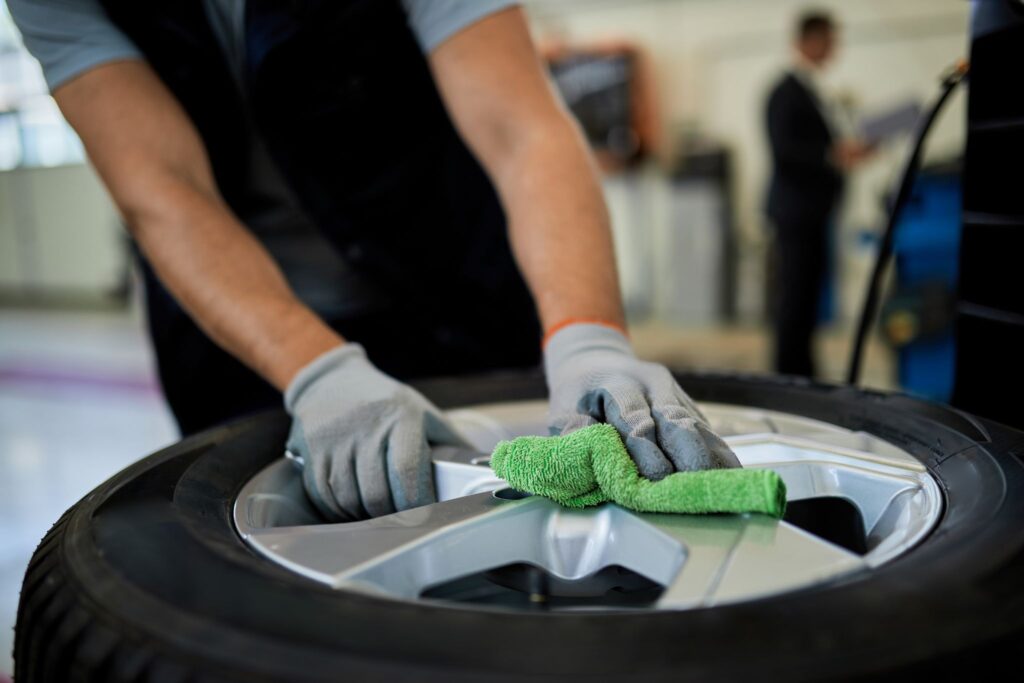
The right compound depends on the buffing wheel it’s paired with. A heavy-cut compound needs a hard buff to actually remove oxidation, while a finishing compound needs a soft buff to bring out shine without swirling the surface. Using the wrong combination is one of the most common reasons a polishing job doesn’t turn out the way it should.
At Truck Soap, we hear this question almost daily: someone has a compound in hand and no idea which buff to run it on, or they’ve got a buff spinning and aren’t sure which bar to load onto it. It’s a fair question: buffs and compounds aren’t universal, and the wrong pairing wastes time, wastes product, and sometimes wastes a wheel. We’ve built our own product line around getting this pairing right, so here’s exactly how we walk customers through it.
Why Pairing Truck Buffing Wheels And Compounds Matters
Think of it this way: the buff is the delivery system, and the compound is what does the cutting or finishing. A soft buff loaded with a heavy-cut compound won’t move fast enough to actually strip oxidation. You’ll be there all day and still not get the result. Flip it around, and a hard buff loaded with a finishing rouge will swirl a surface that was supposed to come out smooth. We see both mistakes constantly, and both come down to the same thing: treating the buff and the compound as separate decisions instead of a matched pair.
Our Buffing Wheels, by Hardness
We carry Marpol buffs across a full hardness range, and each one has a specific job:
- Yellow Very Hard buff– our most aggressive option, meant for the initial cut on heavily oxidized or pitted aluminum.
- Purple Medium Hardness buff– the step-down buff, used once the worst oxidation is gone and the surface still needs leveling.
- Green Flexible Soft buff– a finishing buff, built for smoothing haze rather than removing material.
- Natural Soft buff– our softest option, reserved for final-stage finishing or lighter maintenance polishing where there’s not much correction needed at all.
Our Compounds, by Job
- Marpol C106 Pink Rouge (Heavy Cut)– this is our aluminum-specific heavy-cut compound, built to strip oxidation and pitting. We pair it with the Yellow Very Hard buff for the first pass.
- Marpol C94 Heavy Cut Green Bar– worth being clear about this one: it’s our stainless steel compound, not aluminum. If you’re working on aluminum wheels, C106 is the one you want. Mixing these two up is probably the single most common mistake we see customers make.
- Marpol Volax Blue Finishing Rouge– our finishing-stage compound, used after cutting to clear the last haze and bring up the mirror shine. We pair it with the Green Flexible Soft or Natural Soft buff.
How We’d Pair Them, By Condition
Heavily oxidized or pitted aluminum:
Start with the Yellow Very Hard buff and C106 Pink Rouge for the initial cut, step down to the Purple Medium Hardness buff as the surface clears, then finish with Volax Blue Rouge on a Green Flexible Soft buff.
Lightly dulled aluminum:
No need for the heavy cut. Go straight to Volax Blue Rouge on a Natural Soft buff for a faster refresh.
Stainless components, like tanks and trim:
C94 Heavy Cut Green Bar is the right call here, not C106.
Keep the Buff Working, Not Just Spinning
A buff loaded up with spent compound stops cutting properly. Instead of polishing, it just smears grime around. That’s exactly what we built our Wheel Rake for: it cleans the buff face between passes so the compound keeps doing its actual job. We also tell every customer the same thing, wipe the wheel down before switching compounds. Carrying leftover cutting compound into a finishing stage will dull your results instead of sharpening them.
If You’re Working By Hand
Not everyone’s running a bonded buff and bar setup. For hand application or a lower-speed buffer, our Flash Liquid Metal Polish line follows the same logic by job: Flash Pre-Cut for wheels that still have oxidation to clear, Flash Billet for bare polished aluminum that just needs brightening, and Flash Green for the routine touch-ups in between full corrections.
The Bottom Line
We built our buff and compound lineup around one idea: match the tool to the condition of the metal, not the other way around. Get the pairing right and the whole job goes faster, with a lot less guesswork and a lot less wasted product.
Need the full wash-to-finish process? Check out our guide to polishing aluminum wheels. Ready to shop? Browse our Marpol buffs and rouge or Flash Liquid Metal Polish lines, or reach out to our team if you’re not sure which pairing your wheels need.
FAQs
Can I use one buff for both cutting and finishing?
We wouldn’t recommend it. A hard buff won’t finish smoothly, and a soft buff won’t cut fast enough on real oxidation. You need both stages to get a proper mirror finish.
What actually happens if I use C94 on aluminum by mistake?
It won’t damage the wheel, but it won’t cut oxidation nearly as effectively. C94 is formulated for stainless, and C106 for aluminum, so you’ll end up doing more passes for less result.
How do I know when to switch from the Yellow buff to the Purple buff?
Once the heavy oxidation and pitting are visibly gone and the surface starts reflecting light more evenly across the whole wheel, that’s your signal to move to the softer buff for continued leveling.